Evaluation of Different Stencilmaking Methods for Screen Printing
Renmei Xu, Susan C. Londt, and Hans P. Kellogg
Ball State University
Published 2010
DownloadAbstract
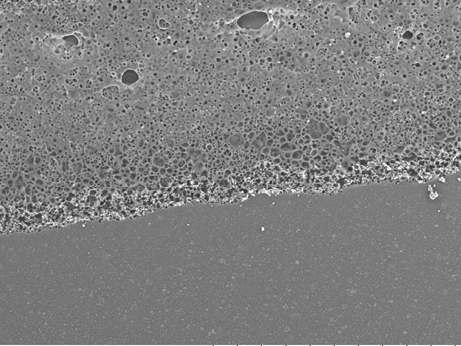
Screen stencils for screen printing can be prepared using conventional film-based photographic methods or contemporary computer-to-screen (CTS) technologies such as inkjet, digital micromirror devices (DMD), and violet-blue diode laser. CTS increases efficiency and eliminates problems related with exposure and processing of film; however, the prices of CTS systems are still high and their reliability also needs to be improved. In film-based photographic methods, image film can be created photographically or printed digitally. The photographic methods involve an imagesetter and a film processor. The printing methods used recently are inkjet printing and thermal printing. Printing methods increase efficiency and eliminate photographic materials, but they might have quality issues. In this study, a Linotronic 330 imagesetter and a Fujifilm FG 550E film processor were used for the photographic method. An Epson Stylus® Photo R1900 printer was used for the printing method along with AccuRIP® software and AccuFast® film. Transmission density of inkjet-printed film can achieve as high as that of photographic film, but its dot gains are much higher. Streaks on solid area can also be observed. Both photographic and inkjet-printed films were used to expose screens coated with photographic emulsion. Another stencilmaking method is laser cutting, which has been used in industrial stencils, decorative lettering stencils, and graphic stencils. In this study, laser cutting was used to make stencils for process screen printing. A CO2 laser cutter Model M-35 from Universal Laser Systems was used to remove the image area on the emulsion layer of knife-cut stencil film. Laser power and cutting speed were varied to obtain optimum results. The laser-cut stencil was moistened and attached to a screen. During this process, water dissolved emulsion on nonimage areas it flowed to image area. Stencil thicknesses and surface roughness of all the screen stencils were measured and compared. Microscope images were also used to evaluate stencil quality. Advantages and disadvantages of the three stencilmaking methods were discussed.