Conformity Assessment of the G7® Database
Pierre Urbain and Robert Chung
Rochester Institute of Technology
Published 2013
DownloadAbstract
There is a need for certification in the printing industry worldwide. Printing certification systems, such as the G7® developed by IDEAlliance, have been adopted successfully in the U.S. and Asian printing industries. In order to increase the value of certification, there is a need to analyze the percent pass/fail (%pass) of all jobs submitted as a whole and by printing process. Indeed, it is in the mutual interests of printers and print buyers to find out how a certification scheme performs as it applies to the real printing industry. Are the tolerances too tight or too loose? It is equally valuable to determine if a particular conformity requirement and its associated tolerance causes more non-conformance than other requirements. A database of more than 700 data files, measured from the P2P25 targets and made available from Rochester Institute of Technology (RIT), was analyzed.
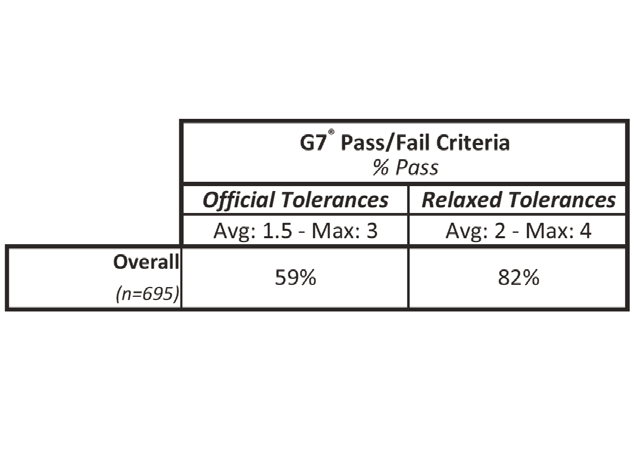
The results of this analysis showed that: (1) 59% of the submissions passed the official G7® criteria, while 82% passed the relaxed tolerances; (2) gray balance (ΔCh) was the major cause of non-conformance as opposed to tone reproduction requirements; and (3) digital printing yielded more passing files (73%) than offset printing (56%) under the G7® criteria Additionally, Fujifilm has proposed a different conformity assessment system with three requirements and one metric (ΔE00). These results showed that this method had a lower %pass than the official G7® method.