Evaluation of Creasing and Folding Performance on Printed Paperboard Packaging
Yu-Ju Wu & Tom Reeves
Appalachian State University
Published 2013
DownloadAbstract
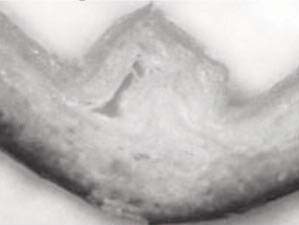
The major functions of a package are to protect, contain, and promote products. Paperboard can be converted into packages by relatively straightforward operations such as cutting, folding, and gluing. To make the paperboard packages appealing for consumers, the fold lines must be neat and undamaged. However, a difficulty in paperboard converting is the cracking of paperboards during folding. Cracked folds render printed packages less appealing to consumers. The purpose of this study is to evaluate creasing and folding performance of different grades of printed paperboards. Paperboards printed with water-based flexo ink, oil-based offset ink, and pigment-based ink-jet ink were tested. Three grades of solid bleached board (SBS), 10-point, 12-point, and 13-point, were used in the test. A flatbed sample maker from Gerber was employed to perform die-cutting and creasing. Creasing is carried out with creasing rules, which have rounded ends. Different creasing settings (with a scale ranging from numbers 17, 33, 42, and 50) were experimentally applied to determine the creasing property of tested paperboards. It was found that the creasing settings No. 33 and No. 42 creates better and well-defined folding lines during the subsequent folding, especially with CD crease. The crease rule used in this study works well with the 13-point paperboard. It forms great shape of crease bead, creates thin, multilayer structure for either CD or MD, resulting in clear defined fold lines.