Perceptual Gloss Across Real and Virtual Samples with Diverse Backgrounds and Dynamic Ranges
Yuan Tian, Elena Fedorovskaya, and Mekides Assefa Abebe
Munsell Color Science Laboratory, Rochester Institute of Technology
Published 2024
DownloadAbstract
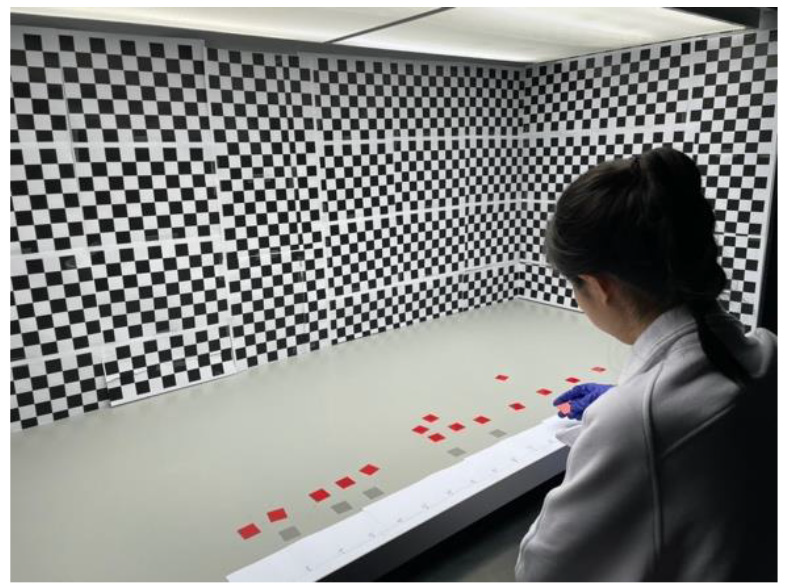
Gloss perception is influenced by the illumination field, background, scene dynamic range, object shapes, and material surface optical properties. Additionally, there is a discrepancy in gloss perception between real-world and virtual scenarios. To understand gloss perception in both contexts, especially considering the varied backgrounds against which materials are encountered, a thorough measurement and mathematical modeling of the physical and perceptual properties of the samples is necessary. Accordingly, we have designed an overall framework for perceptual gloss measurement and cross-media reproduction, for studies to be conducted on a component-by-component basis. The first component focuses on understanding and measuring gloss perception for real and colored samples. However, current state-of-the-art studies on perceptual gloss, in both real and virtual viewing modalities, measure perceptual gloss using only achromatic stimuli. There is an established assumption that a perceptual gloss model based on the achromatic characteristics of materials can accurately represent gloss perception for all types of materials. The influence of color on the glossiness of colored materials has not been well investigated. In this study, we investigate and present the results of our initial exploration into the influence of color on gloss perception. The study was conducted using flat painted stimuli with various levels of glossiness, along with the standard NCS gray gloss scale samples. The color and gloss characteristics of the stimuli were measured both physically and perceptually. Perceptual gloss assessments were performed in a controlled laboratory setup under standard D65 illumination. The CIELCh and glossmeter measurement results demonstrate that color significantly influences gloss perception. With increasing gloss units, we observed a decrease in luminance and increase in chroma, along with a hue shift towards yellow. Variations in the dependency of these color attributes among the NCS gray gloss stimuli, painted chromatic stimuli, and paper backings were also noted. It is also shown that perceived gloss measurements can be effectively modeled as a quadratic function of gloss units. In general, the study provides useful insights into how the chromatic characteristics of materials influence perceptual gloss. It suggests that perceptual gloss models and reproductions should include a broader range of chromatic materials and types. Our future research will build on these findings and the general framework to model perceived gloss in both virtual and physical environments, enhancing cross-media reproduction.