Development of Bionanocomposite Packaging Film from Carboxymethyl Cellulose, Vanillin and Montmorillonite Nanoclay: Optimization Using Response Surface Methodology
David Jaucian Alcarde Jr
Rochester Institute of Technology Dusty Rhodes Graduate Student Paper
Published 2025
DownloadAbstract
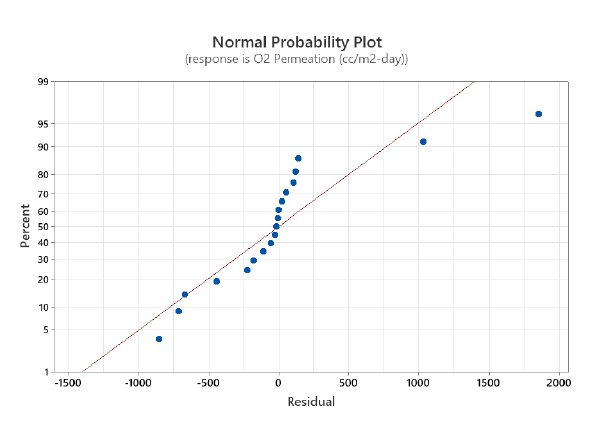
Substituting petroleum-based plastics with biobased or biodegradable alternatives contributes to mitigating the environmental burden of conventional packaging. This project aims to develop and characterize a novel bionanocomposite packaging film made from carboxymethyl cellulose (CMC), vanillin, and montmorillonite nanoclay. A design of experiments approach using Response Surface Methodology was used to investigate compositions in an attempt to optimize the formulation. Samples were manufactured via solvent casting and tested for mechanical properties and oxygen transmission rate (OTR). The microstructure of a selected samples was analyzed using transmission electron microscopy (TEM) to examine the morphology of the nanoclay. Prototype films were successfully produced with overall good mechanical properties and high transparency. Preliminary microstructure analysis vie TEM suggested an intercalated nanoclay structure. The RSM model did not show statistical significance or predictability. This may be due to uncontrolled factors and the small range between the levels. Most of the OTR values, between 150 and 1000 cc/m2 day, can be consider breathable films. Case-ready meat, fish, sausage, fresh produce and vegetables, and other food goods needing breathable films can be wrapped with these blended compositions, which offer films and/or film structures with a mix of oxygen breathability, high formability, and structural strength.