Assessing Direct-to-Film Color Accuracy in Textiles
Amanda W. Bridges 1, Celeste M. Calkins 2, Erica B. Walker 1
1 Clemson University, 2 Illinois State University
Published 2026
DownloadAbstract
The market for printed textiles is a rapidly growing segment of the industry due in large part to the increase in on-demand and short run printing. “Fast fashion” is transforming the textile industry in ways that many perceive to be environmentally unfriendly and not sustainable. The focus of “fast fashion” is on cheap manufacturing processes, mass consumption, and short-term garment use (Niinimaki et al., 2020). While screen printing remains dominant for mass production, digital printing technologies are on the rise for the smaller, more customized print runs that feed the “fast fashion” trend. This study is designed to determine if digital technology could support a transition back to a more traditional “slow fashion” industry should consumer behavior and environmental advocates demand that change.
Direct-to-garment and direct-to-film printing are two relatively new technologies that are increasing in popularity. Direct-to-garment printing uses a modified inkjet technology that sprays ink directly onto the textile (Walker, 2022). Direct-to-film prints onto a heat-transfer film that is then transferred to the garment using a special adhesive powder and heat press (Montoya, 2025). Some advantages of these processes include greater image detail, higher energy efficiency, and versatility of fabric options (Walker, 2022, Montoya, 2025). However, these emerging technologies also introduce some challenges for manufacturers. Some notable issues include color accuracy, the ability to ensure consistent color when transitioning from spot colors in screen printing to CMYK in digital print methods and maintaining color durability over time. For this study, color accuracy refers to the recreation of a specified color onto the textile. This becomes significant in branding contexts where a brand insists on color accuracy across all products irrespective of manufacturing process or substrate type. Color consistency refers to the reproducibility of a color over repeated prints. In some cases, there may be external or environmental changes that result in diminished color consistency. Color durability refers to the ability for color to withstand wear and tear including stain treatments and laundering. This study will focus on color accuracy in direct-to-film printing using a variety of textile compositions, including polyester and cotton/polyester blends with a test target consisting of a broad spectrum of colors. Each color will be repeated three times on the target to ensure that the process does not introduce significant variance dependent on where a color is found in the design.
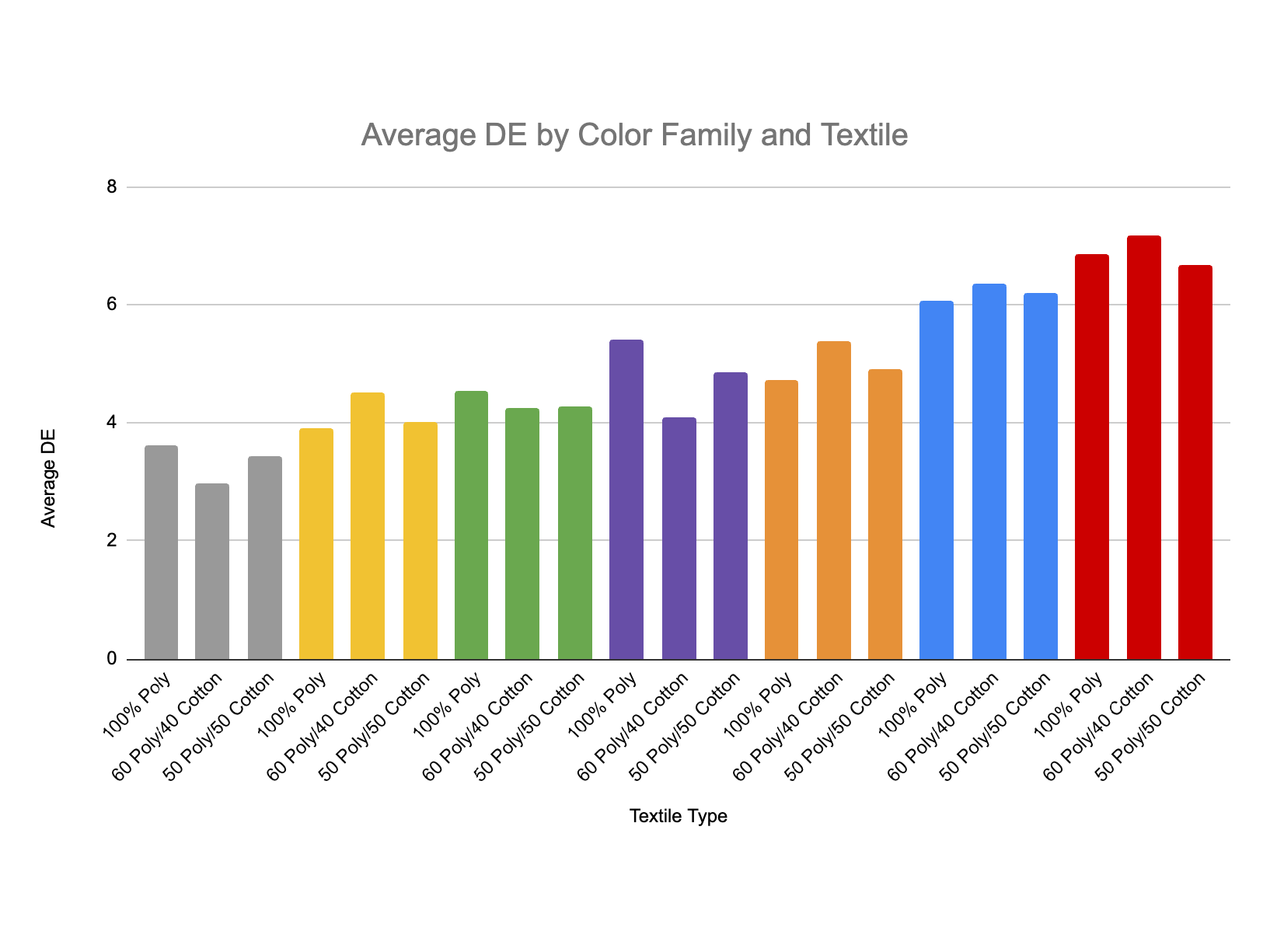
This study examines the questions: How accurately does the direct-to-film process reproduce color if we do not apply a custom color profile? Within that analysis, we will also examine the color accuracy difference with a base layer of white ink and without it. One of the goals of this study is to determine if there are specific colors that are more difficult to accurately and consistently print with the direct-to-film process.
The results will be meaningful for several different audiences including textile manufacturers, brand holders, educators, and consumers. They can provide textile manufacturers with color accuracy recommendations and potentially inform brand holders about whether short-run orders provide accurate brand color. Results will also benefit graphic communications educators who are seeking effective strategies for teaching students about color management, the difficulties associated with digital print technologies, and the unique challenges textile printing presents in the area of color management.